By BOBOS · 8 November 2026 · 2 min read
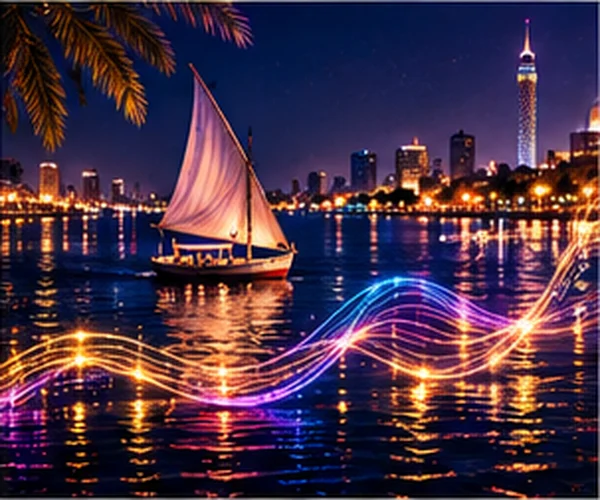
Some places become part of a person’s musical memory. It might be an old street, a café you used to sit in, or a city tied to a certain stage of your life. But when we talk about Egypt, there is something bigger than the place itself: the Nile.
The Nile is not just a river running through the country; it is a symbol present in the Egyptian soul, in literature, songs, folk tales and art. That is why it has inspired so many creators, in traditional music and in modern work alike.
For BOBOS, the idea of the Nile holds a special artistic interest. He sees in combining the Egyptian spirit with contemporary music production a chance to make work with a local character that can still reach listeners from different cultures.
One musical idea that reflects this direction is a project called Ride the Nile. The name alone opens a wide space for the imagination: a musical journey that evokes the river, movement, the city, nature and Egyptian rhythms.
How can the image of the Nile become modern music?
You can start with rhythm. Egyptian music has a great variety of rhythmic patterns, and some of them can be reinterpreted with electronic production tools. Instruments such as the tabla, the daf, the oud and the ney can be placed inside modern arrangements built on digital beats and electronic instruments.
There is also the cinematic side of music. Wide melodies and long, layered sounds can give a sense of space and movement, as if the listener were taking part in a journey through changing scenes.
Not every piece inspired by the Nile has to be calm or traditional. It can be fast and danceable, electronic, or even experimental. Egyptian identity is not limited to one musical mould.
Most importantly, a piece of art should not simply use Egyptian names or familiar images to seem Egyptian. The connection to the culture has to show in the musical details themselves: in the rhythm, in the way sounds are arranged and in the artistic choices.
On the other hand, an artist can benefit from global influences without losing his roots. Electronic music has become a shared language across many cultures, and it can be used to present local elements to audiences who have never met them before.
That opens the door to a lovely experience: someone in London or Manchester hears a track with an Egyptian rhythm and, through it, discovers a piece of Egyptian culture in an indirect way.
For an artist, the Nile is not just a subject for a song; it is a space of images, memories and meanings. It can be the starting point for a long piece of music, a complete album, or an artistic project that brings together authenticity and renewal.
Real art does not copy a place as it is; it reinterprets it through the artist’s feeling and imagination. Perhaps that is why the Nile will always be present in Egyptian creativity: it is not only a view you can photograph, but also a story you can hear.
Read and listen next

More articles
- Want to be a singer? The complete step-by-step guide to learning to sing and vocal exercises
- Ammar El-Sherei: the "Diver in the Sea of Melody" who composed the music of "Raafat El-Haggan"
- Sayed Mekkawy: the sheikh who saw music with his heart and composed "El-Leila El-Kebira" and "Ya Mesaharni"
- All articles