By BOBOS · 8 November 2026 · 8 min read
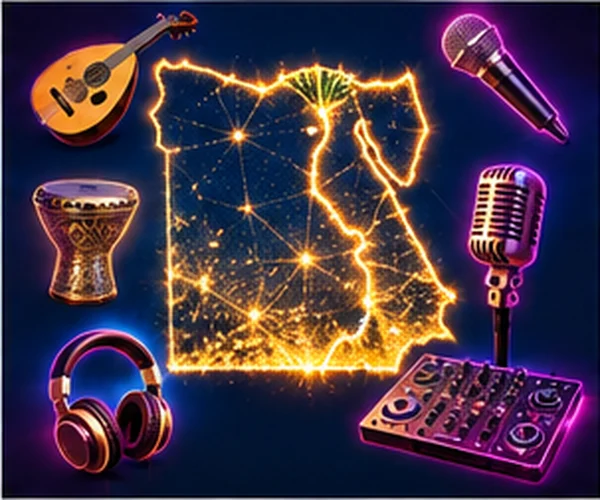
Egypt is not just a country with a long musical history; it is one of the most varied music markets in the Arab world. While some people enjoy the songs of Umm Kulthum and Abdel Halim Hafez, others prefer shaabi songs, mahraganat, rap and trap, and another group looks for electronic music and Western songs.
Interestingly, these genres do not necessarily compete for separate audiences. The same person might listen to a tarab song in the morning, a shaabi song in the car, a mahragan at a social occasion, and then switch to electronic music while working out.
But which kinds of music are most popular in Egypt? What kind of audience prefers each one? And can we put rough numbers on the size of each audience?
First: classical Arabic tarab, an audience that listens for melody and voice
Audience: all ages, with a clear presence among lovers of musical heritage and older generations.
Tarab remains one of the most important parts of Egyptian musical culture. Generations grew up on the voices of Umm Kulthum, Mohamed Abdel Wahab, Abdel Halim Hafez, Farid al-Atrash, Nagat El Saghira and Warda.
This style relies on strong melody, vocal performance and lyrics, and gives the singer plenty of room to show his ability to express and control his voice.
Its audience pays attention to musical detail, such as melodic transitions, maqams and arrangement, not just a fast beat or how popular a song is.
But the belief that tarab now belongs only to older people is inaccurate. Many young people still listen to the old songs, and some discover them through videos and digital platforms.
Second: shaabi music, the voice of the Egyptian street
Audience: wide, across classes and ages, with a strong presence at weddings, occasions and in cars.
Shaabi (popular) music is one of the styles most tied to Egyptians’ daily lives.
Ever since a generation of shaabi singers brought the details of daily life into song, this music has been a way to express love, joy, quarrels and social conditions.
The shaabi song has evolved over the decades, from traditional recordings and bands to modern arrangements using electronic beats and Western instruments.
Among the best-known names in this style are Ahmed Adaweya, Hakim and Shaaban Abdel Rahim, along with other generations who offered different forms of the shaabi song.
It is worth noting that “shaabi” does not mean the audience belongs to one social class. A successful shaabi song can travel from neighbourhood weddings to private parties, cars and cafés, reaching many different groups.
Third: mahraganat, the music of a generation that built its own audience
Audience: strong among young people, especially those who respond to dance music and digital culture.
Egyptian mahraganat in their familiar form emerged in the first decade of the new millennium and spread fast with the growth of the internet, mobile phones and video-sharing sites.
Mahraganat were not just a development of the shaabi song; they were a shift in how music was made and shared.
Producers and singers could work with limited means, making tracks on computers with recording and arrangement software, then publishing them online and reaching listeners directly.
Mahraganat usually rely on powerful electronic beats, repeated melodic phrases, fast or spoken-style delivery, and lyrics close to daily life.
Their spread was tied to neighbourhood weddings, crowded urban areas, public transport and cafés, before they went beyond those spaces to a much wider audience.
A study published by the Middle East Institute notes that mahraganat are strongly linked with young people and popular culture, and that the internet was a major factor in their spread and development.
Fourth: Egyptian rap, from expressing reality to making stars
Audience: young people and teenagers in particular, with a growing base of listeners of different ages.
Egyptian rap has developed noticeably in recent years, and now has an audience that follows artists, albums and new releases closely.
Rap relies on lyrics, delivery and rhythm, and gives the artist room to express his personal experience and his view of society, success, relationships and everyday challenges.
Among the names that have shaped the Egyptian scene are Wegz, Marwan Pablo, Marwan Moussa and Abyusif, each with his own style of writing, delivery and production.
The difference between rap and shaabi music is that rap gives the lyrics a more central place, while some shaabi forms and mahraganat rely on the sung phrase, the rhythm and a repeated hook.
But the borders between genres are not fixed; some works combine rap, shaabi and trap.
Fifth: trap, an electronic sound for a new generation
Audience: young people, especially those interested in global music culture, digital fashion and hip hop.
Trap is one of the genres that has gained a clear presence on the Egyptian music scene.
It relies on distinctive electronic drums, broken rhythms, deep bass and wide use of sound effects and vocal processing.
It also allows a mix of singing and rap, with a vocal delivery that fits modern electronic arrangements.
One reason for its spread is that it lets producers and artists experiment, without being bound to the traditional rules of the Arabic song.
Trap has become part of a music scene in conversation with global trends, while also absorbing Egyptian words, dialects and expressions.
Sixth: Egyptian pop, the song that tries to reach everyone
Audience: wide, from teenagers to adults, with tastes ranging from romantic to dance songs.
Pop is one of the most flexible styles, because it can borrow elements from many genres.
You may find a pop song with a Western beat that still relies on an Eastern melody and Egyptian lyrics, and another that leans towards electronic music, dance or romance.
Its success factors include a melody that is easy to remember, clear lyrics and a strong hook that stays in the listener’s head.
Pop can reach a wide audience because it does not require interest in a particular genre; it offers an easy and enjoyable experience.
Seventh: Western and electronic music, an audience looking for something different
Audience: varied groups, with a notable presence among young people and fans of global music, dancing and parties.
There is an Egyptian audience for Western music, whether pop, rock, house, techno or electronic music.
Reasons for listening differ: one person loves English songs, another prefers music without words, and a third wants rhythms suited to dancing, driving or working.
Electronic music does not necessarily need a singer or lyrics; a track can be a set of rhythms and sound layers that build a complete experience.
This opens a wide field for specialised radio stations, because listeners can enjoy music for long periods without needing to follow the words.
Eighth: religious music and inshad, an audience looking for meaning and spirituality
Audience: all ages, with interest rising during religious occasions, Ramadan and spiritual events.
No map of Egyptian music can ignore religious chanting, supplications and songs of a spiritual nature.
Egypt has a long history in this field, through its chanters, tawasheeh and religious supplications.
This style offers an experience different from commercial songs: the words, the meanings and the vocal performance take centre stage, and some works rely on the human voice alone or on minimal accompaniment.
One of the best-known names in this field is Sheikh Sayed al-Naqshabandi, who left a great mark on Egyptian chanting and supplication.
By the numbers: what does research say about Egyptian listeners’ tastes?
It is important to distinguish between how many people listen to a genre and what share of the whole population that audience represents; they are not the same thing.
One recent study in this area was published in March 2026 in the journal BMC Psychology, titled “Music preferences, listening purposes, perfectionism and substance use in Egyptian college students”, and covered Egyptian students aged 18 to 24. The study looked at three main styles among young people: rap, Egyptian folk music and classical Arab music, and noted that a preference for rap was more common among male students.
These findings offer an important observation: classical Arab music is still strongly present alongside rap and shaabi within the young generation, which breaks the common idea that young people only listen to modern music.
It is worth remembering that such studies rely on specific samples and do not necessarily represent all Egyptians.
Who listens to what? A rough map of the audience
The audience can be summed up by general trends, not as fixed age or social boundaries:
| Genre | Where clear interest shows |
|---|---|
| Tarab | Lovers of classical voices and melodies, across generations |
| Shaabi | The audience of weddings and occasions, many social groups |
| Mahraganat | Young people and lovers of dance beats |
| Rap | Young people and followers of hip hop culture |
| Trap | Fans of modern music and electronic production |
| Pop | A wide audience of many ages |
| Electronic | Lovers of rhythm, dancing and music without words |
| Inshad | People interested in religious and spiritual content |
Why is it hard to know each genre’s share of all Egyptians?
Several reasons make an accurate breakdown difficult.
First, among the available data there is no recent, unified national survey dividing all Egyptians by favourite genre.
Second, one listener can belong to more than one musical group. He may love tarab, rap and shaabi at the same time.
Third, listening habits change with place and occasion. The song someone listens to alone may differ from the music they choose at a party or while driving.
Fourth, views and plays on platforms do not necessarily equal unique listeners; one person may replay a song dozens of times.
Conclusion: Egypt is not one musical audience
The Egyptian music scene is too big to be reduced to one genre. There is an audience that adores tarab, another that lives with shaabi and mahraganat, an audience that follows rap and trap, and another that looks for electronic music and international songs.
Most importantly, these audiences are not completely separate; several musical tastes can live inside one person.
This variety is a big opportunity for Egyptian radio stations, because a successful station is not necessarily one that tries to please everyone with a single playlist, but one that understands its audience and offers the content they are looking for.
Music in Egypt is not just a collection of different songs; it reflects generations, cultures and many social experiences, and every musical style tells part of people’s lives.
Read and listen next
More articles
- Want to be a singer? The complete step-by-step guide to learning to sing and vocal exercises
- Ammar El-Sherei: the "Diver in the Sea of Melody" who composed the music of "Raafat El-Haggan"
- Sayed Mekkawy: the sheikh who saw music with his heart and composed "El-Leila El-Kebira" and "Ya Mesaharni"
- All articles